Mosquitoes are more than just a backyard nuisance; they are a global health threat. Transmitting serious illnesses such as malaria, dengue, and Zika to hundreds of millions of people annually, these insects are formidable foes. While effective vaccines for many of these diseases are still lacking, preventing the bite itself remains the most critical strategy for safety.
This is where a reliable mosquito repellent comes into play. While shelves are stocked with chemical options, there is a growing movement toward homemade mosquito repellent solutions. Driven by concerns over synthetic chemicals, skin irritation, and environmental impact, many people are seeking natural, low-cost alternatives to commercial sprays.
In this guide, we will explore the science behind how repellents work, compare commercial products to DIY natural alternatives, and provide proven recipes to help you stay bite-free naturally.
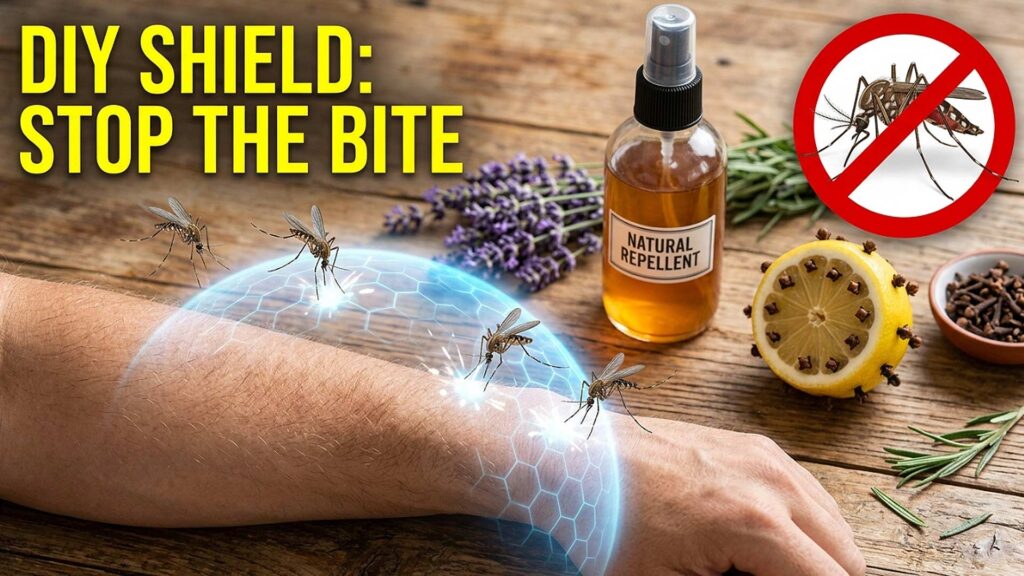
How Mosquito Repellents Actually Work
To understand how to make an effective repellent, you first need to understand the enemy. Mosquitoes do not bite randomly; they hunt. They hone in on human hosts by detecting specific biological signals: body heat, carbon dioxide (exhaled when we breathe), and skin odors. These cues are picked up by specialized olfactory receptors on their antennae.
A mosquito repellent, whether a synthetic chemical or a natural plant oil – works by disrupting this detection system.
The “Invisibility Cloak” Effect
Contrary to popular belief, repellents don’t necessarily smell “bad” to mosquitoes. Instead, they confuse or mask the scent cues that identify you as a meal. For example, DEET interferes with the receptors on a mosquito’s antennae, effectively blocking its “nose”. This makes the wearer invisible to the insect.
Most effective homemade ingredients work on this same principle. They coat the skin or the surrounding air with volatile compounds that obscure human scent, resulting in fewer landings and bites. It is important to note that repellents generally do not kill mosquitoes; they simply prevent them from biting.
Commercial vs. Homemade Mosquito Repellents
When choosing between a store-bought brand and a homemade mosquito repellent, it is essential to weigh the pros and cons.
Commercial Repellents (DEET, Picaridin)
Commercial products usually contain EPA-approved chemicals like DEET, picaridin, or IR3535.
- Pros: They are rigorously tested for safety and efficacy. A standard 15-30% DEET lotion can provide long-lasting protection, typically ranging from 6 to 12 hours.
- Cons: Some users dislike the chemical odors, worry about potential environmental residues, or experience skin irritation. Synthetic repellents can also damage plastics and synthetic fabrics.
Homemade Repellents (Essential Oils)
DIY recipes rely on plant oils such as citronella, neem, lavender, and lemon eucalyptus.
- Pros: They are biodegradable and generally considered eco-friendlier, breaking down into non-toxic by-products. They are often lower in acute toxicity and avoid the “plastic-melting” side effects of chemicals like DEET. Additionally, they can be customized with pleasant scents.
- Cons: The primary drawback is duration. Plant oils evaporate quickly, usually providing protection for only 1-3 hours before reapplication is needed. They also lack standardized safety testing compared to EPA-registered products.
Top Ingredients for Homemade Mosquito Repellent
Not all plants are created equal. If you are mixing a homemade mosquito repellent, you need ingredients backed by science. Here are the most effective natural options:
1. Oil of Lemon Eucalyptus (OLE)
This is the heavy hitter of natural repellents. Extracted from Corymbia citriodora, this oil contains a compound called p-menthane-3,8-diol (PMD).
- Efficacy: The CDC and EPA list OLE (or its PMD derivative) as a proven repellent. In trials, a 32% OLE solution provided over 95% protection for 3 hours, performing similarly to low-dose DEET.
- Note: Pure essential oil must be specially processed to increase PMD content to be fully effective.
2. Citronella (Lemongrass)
Citronella is the classic scent of summer. Derived from Cymbopogon grasses, citronella oil is EPA-registered as an insect repellent.
- Efficacy: When properly formulated, such as in a lotion or candle, it provides about 1-2 hours of protection. One study found a 32% citronella mix gave roughly 95% protection for 2-3 hours.
- Usage: It masks human odors with a strong citrus scent.
3. Neem Oil
Widely used in South Asia and Africa, neem oil comes from the seeds of the neem tree (Azadirachta indica) and has a potent garlic-like odor.
- Efficacy: Research shows that formulations with neem oil can significantly reduce mosquito landings. A lotion containing 17.5% neem seed oil was shown to cut mosquito landings without irritating the skin.
- Mechanism: Its active compound, azadirachtin, can disrupt mosquitoes at multiple life stages.
4. Mint Family (Peppermint & Catnip)
Plants in the mint family are surprisingly powerful.
- Catnip: The oil from catnip (Nepeta cataria) contains nepetalactone. Lab tests have shown this compound can be up to ten times more effective than DEET at repelling mosquitoes.
- Peppermint: A systematic review ranked peppermint among the top natural repellents tested. However, it can be cooling or irritating to the skin in high concentrations.
5. Lavender
If you prefer a floral scent over a citrus one, lavender is a solid choice.
- Efficacy: Animal studies have found lavender oil effective at deterring adult mosquitoes.
- Bonus: Lavender has antiseptic and soothing properties, which can help heal the skin if you do get bitten.
6. Thyme, Clove, and Cinnamon
These kitchen spices are potent repellents but must be used with caution due to their strength.
- Thyme: A 5% thyme oil application gave 91% protection in one study. Burning thyme leaves can also deter mosquitoes by about 85% for an hour.
- Clove & Cinnamon: Clove oil (rich in eugenol) and cinnamon oil can kill mosquito eggs and repel adults. A lotion with 10% clove oil provided almost two hours of protection. Warning: These oils can sting the skin and must be used sparingly.
DIY Recipes: Making Your Own Repellent
Creating a homemade mosquito repellent is straightforward and allows you to customize the scent and texture. Below are three popular formulations: a spray, a balm, and a candle.
Recipe 1: The Essential Oil Spray (Light & Easy)
This is a quick-drying spray perfect for spraying on clothes or exposed skin.
Ingredients:
- 10–15 drops of essential oil (Citronella, Lavender, or Lemon Eucalyptus)
- 2 ounces of carrier liquid
Instructions:
- Combine the essential oils and carrier liquid in a small spray bottle.
- Shake well before every use (oil and water separate naturally).
- Pro Tip: For a stronger effect using Lemon Eucalyptus, dilute it 1:10 in the carrier (1 part oil to 10 parts carrier). A 32% solution has been shown to provide ~3 hours of protection.
Recipe 2: The Long-Lasting Balm (Moisturizing)
Oil-based repellents evaporate slower than water-based sprays, potentially offering longer protection.
Ingredients:
- ¼ cup (60g) Coconut oil
- 1–2 tablespoons Beeswax (pellets or grated)
- ~100–150 drops total of essential oils (Citronella, Lemongrass, Rosemary, or Peppermint).
Instructions:
- Melt the coconut oil and beeswax in a double boiler.
- Let the mixture cool slightly (to approx. 140°F) so the heat doesn’t degrade the essential oils.
- Stir in the essential oils. A good blend is 30 drops citronella, 30 drops lemongrass, and the rest peppermint or rosemary.
- Pour into small tins or jars and let solidify. Apply to skin like a standard lotion.
Recipe 3: The Outdoor Citronella Candle
Candles can help create a mosquito-free zone on patios.
Ingredients:
- 12 oz Soy wax
- Small amount of beeswax (optional, to raise melting point)
- 1 oz (28g) Citronella essential oil (approx. 7% of wax weight).
Instructions:
- Melt the wax safely.
- Remove from heat and stir in the citronella oil.
- Pour into a heat-safe container with a wick.
Effectiveness: Burning these candles releases vapors that repel mosquitoes, though they are most effective when you are close to the candle. One study suggests they offer about 50% extra protection around people.
Safety and Precautions
While homemade mosquito repellents are natural, “natural” does not automatically mean harmless. Essential oils are highly concentrated and require respect.
1. Dilution is Key
Never apply undiluted essential oils directly to your skin, as they can cause burns or allergic reactions.
- General Rule: Use about 5% oil in your carrier (approx. 30 drops per 2 oz).
- Sensitive Skin: Use even lower concentrations (2-3%).
2. Patch Testing
Before slathering a new mixture all over your body, apply it to a small patch of skin and wait 24 hours. If redness or itching occurs, discontinue use immediately.
3. Protecting Children
- Infants: Do not use any repellents on infants younger than 2 months. Instead, cover them with netting or protective clothing.
- Toddlers: The CDC advises against using Oil of Lemon Eucalyptus (PMD) on children under 3 years old.
- Application: Generally, apply repellents to the child’s clothing rather than their skin, or use the lowest effective concentration.
4. Pregnancy
Major health groups like the CDC and ACOG affirm that EPA-registered repellents (like DEET) are safe for pregnant women. Data on homemade oils in pregnancy is more limited.
- Advice: Use sparingly. Avoid high concentrations of potent oils like clove or peppermint. Stick to safer oils like lavender and consider applying them to clothes instead of skin.
Conclusion
Making your own homemade mosquito repellent is a viable, eco-friendly, and cost-effective way to protect yourself from bites. Ingredients like Oil of Lemon Eucalyptus, Citronella, and Neem have scientific backing that proves they can reduce mosquito landings effectively.
However, remember the “Goldilocks” rule of natural repellents: they are effective, but often for shorter periods than their synthetic counterparts. While a DEET spray might last all day, a homemade essential oil spray will likely need reapplication every 1 to 3 hours due to rapid evaporation.
By understanding the ingredients and following safety guidelines for dilution and application, you can craft a repellent that smells great, feels good on your skin, and keeps the bugs at bay.
Disclaimer: While this article outlines the effectiveness of various natural ingredients based on provided sources, always consult with a healthcare provider regarding protection against serious mosquito-borne diseases in high-risk areas.