Getting hard-boiled eggs just right isn’t as simple as it seems. Many people end up with overcooked yolks, rubbery whites, or shells that refuse to peel cleanly.
The good news? There is a simple method that guarantees perfect hard-boiled eggs every time—with the right timing and a few easy tricks.
In this guide, you’ll learn exactly how to boil eggs perfectly, how long to cook them, and the real secret behind easy-peel eggs.
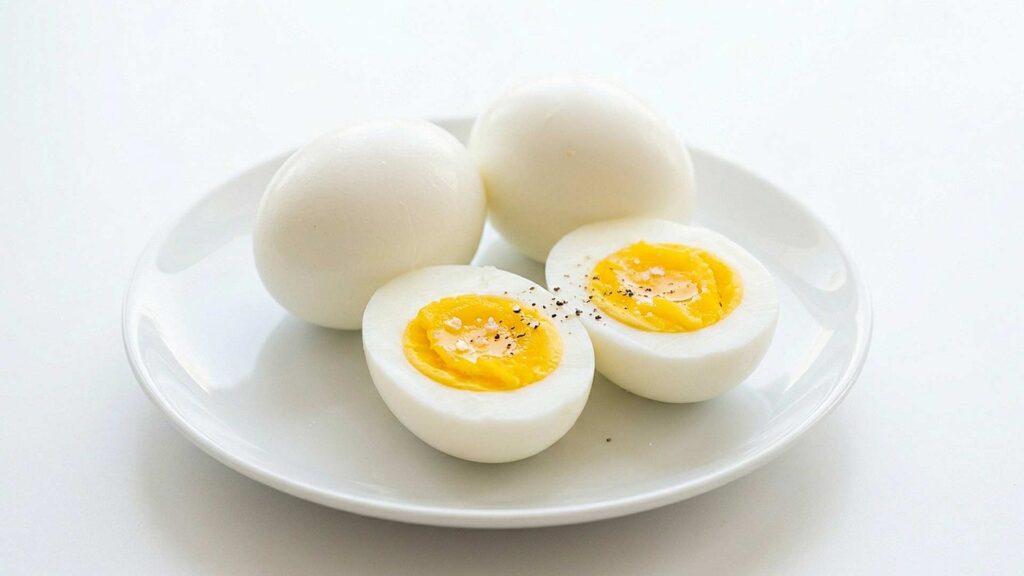
How to Make Hard-Boiled Eggs Perfectly (Step-by-Step)
If you want to know the absolute best way to boil eggs, forget starting them in cold water. Culinary science shows that dropping eggs into hot water cooks the outermost layer of the egg white faster, preventing it from binding to the inner shell membrane.
Here is how do you make boiled eggs perfectly:
Step 1: Prep the Water and Ice Bath
Bring a large pot of water to a rolling boil. You want enough water to completely submerge the eggs by at least one inch. While the water is heating, prepare a large bowl filled with cold water and ice cubes.
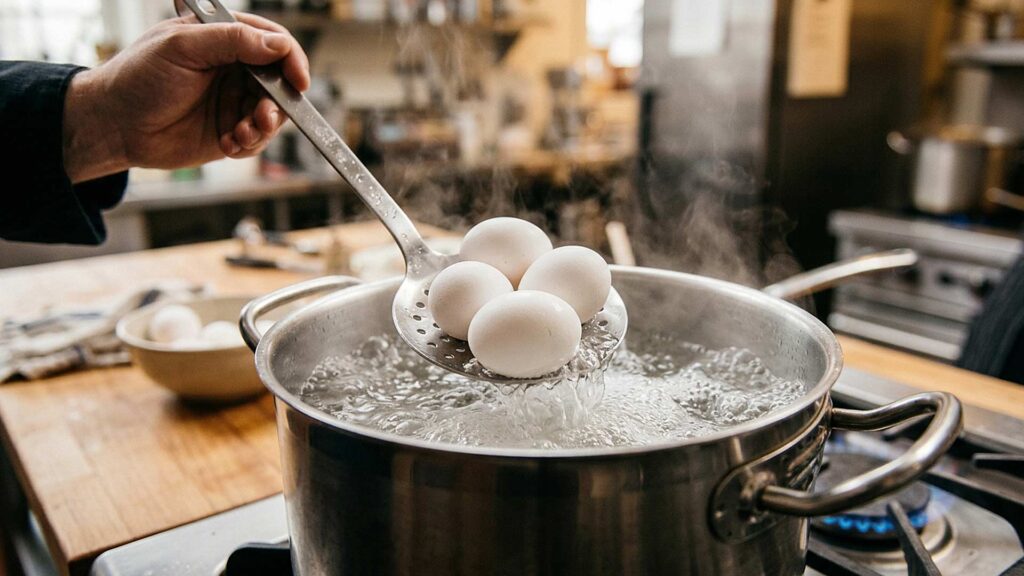
Step 2: Lower the Eggs Gently
Using a slotted spoon or a wire spider, gently lower the cold eggs directly from the fridge into the boiling water. Lower the heat slightly to a vigorous simmer so the eggs don’t bounce around and crack.
Step 3: Set Your Timer
Set your timer immediately based on the chart above. For standard hard-cooked eggs, 10 minutes is the sweet spot.
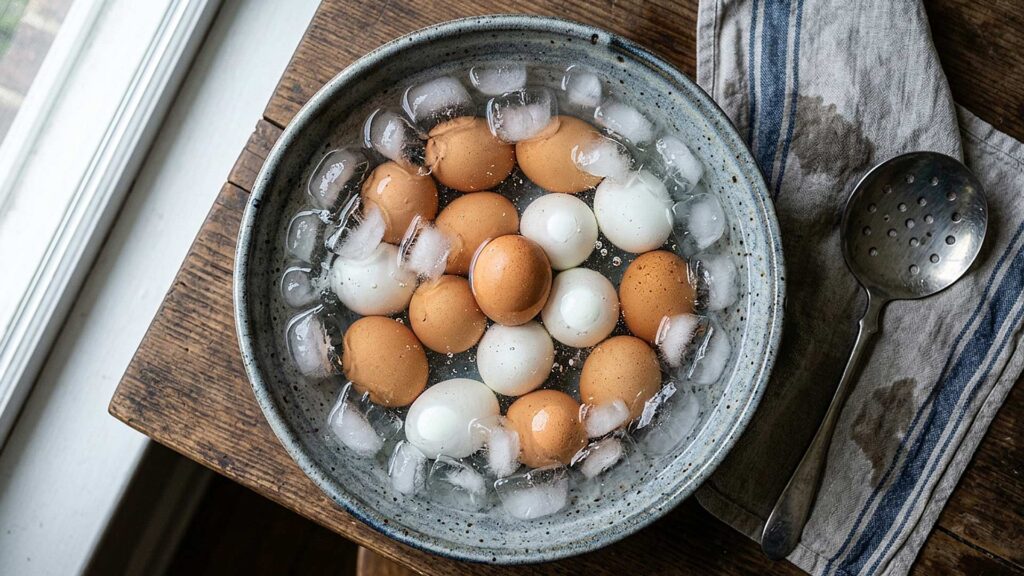
Step 4: The Ice Bath (Crucial Step!)
As soon as the timer goes off, use your slotted spoon to transfer the eggs directly into the ice water bath. Leave them there for at least 10 to 15 minutes. This immediately halts the cooking process and shrinks the egg inside the shell, making peeling a breeze.
The Secret to Perfect Hard-Boiled Eggs
It comes down to two things: timing and temperature control.
- Don’t keep boiling continuously → This overcooks eggs
- Let eggs cook in residual heat → This gives even cooking
- Cool immediately in ice water → This stops cooking and helps peeling
This simple shift makes a huge difference in texture and taste.
How Long to Boil Eggs (Exact Timing Guide)
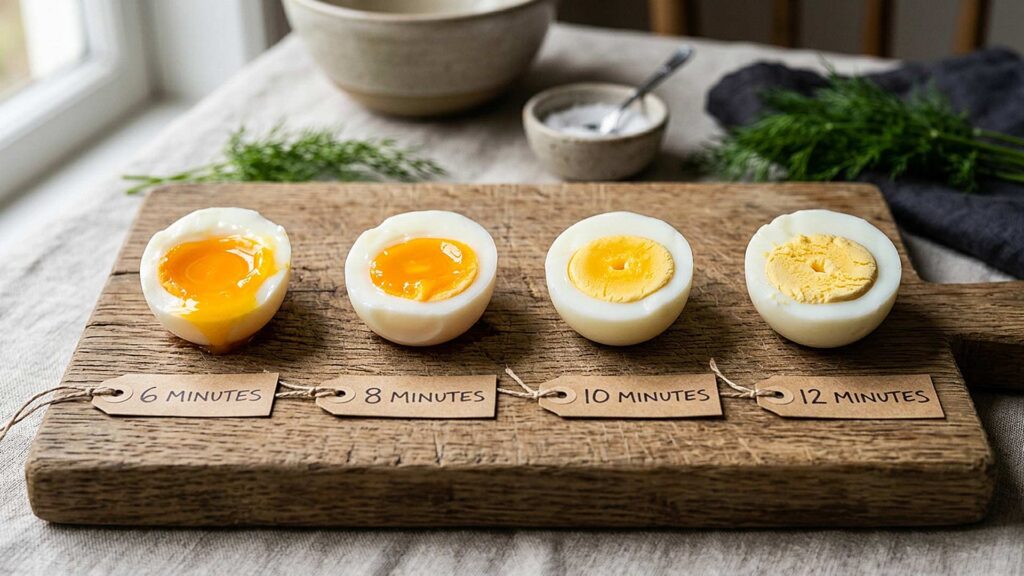
The most common question in the kitchen is, “how long to boil eggs for hard-boiled eggs?” The answer depends entirely on how you like your yolk.
For the most accurate results, use standard large eggs straight from the fridge and follow this timing chart. Drop the eggs into already-boiling water, wait the desired time, and immediately transfer them to an ice bath.
| Boiling Time | Yolk Consistency | Best Used For |
| 6 Minutes | Liquid, runny yolk with soft whites. | Ramen bowls, dipping toast soldiers. |
| 7 Minutes | Jammy, gooey, sticky yolk. | Avocado toast, grain bowls. |
| 8 Minutes | Firm but soft and creamy yolk. | Eating plain, Niçoise salads. |
| 10 Minutes | Classic hard-boiled, firm but not dry. | Egg salad, deviled eggs. |
| 12 Minutes | Very firm, completely opaque yolk. | Pickled eggs, traditional hard-boiling. |
For perfect hard-boiled eggs, aim for 10–11 minutes.
Easy Peel Eggs: The Real Trick
Peeling eggs doesn’t have to be frustrating. Here’s what actually works:
1. Use Slightly Older Eggs
Farm-fresh eggs are notoriously difficult to peel because their pH levels are lower, making the whites adhere tightly to the shell membrane. Buy your eggs a week or two before you plan to boil them.
2. The Hot Water Start
As mentioned in our step-by-step guide, plunging eggs into boiling water rather than cold water is the number one secret to easy peel hard-boiled eggs.
3. Ice Bath is Non-Negotiable
Cooling eggs rapidly separates the membrane from the shell.
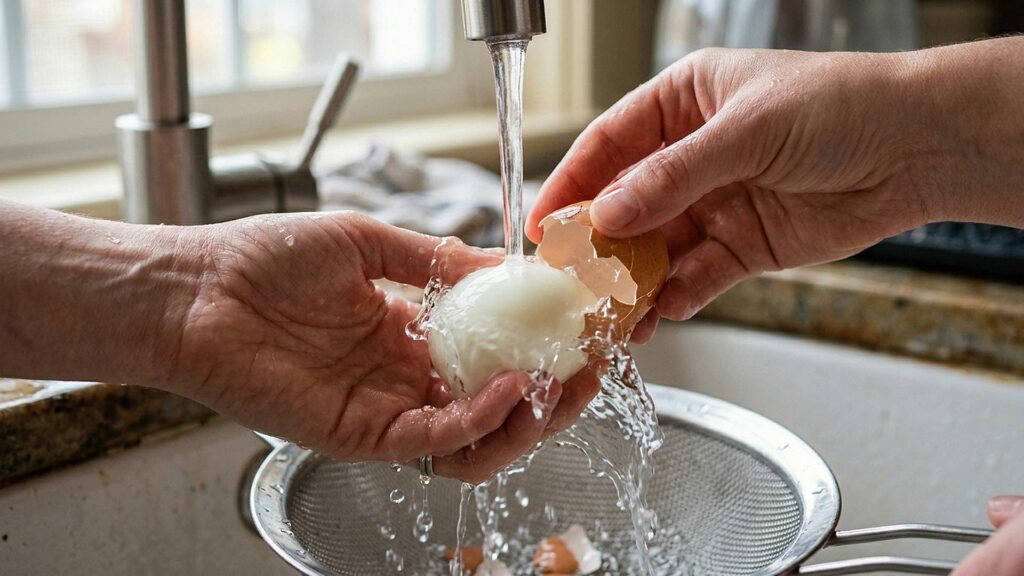
4. Crack and Roll Underwater
When it is time to peel, gently tap the egg on the counter to crack it all over. Roll it lightly beneath the palm of your hand. Then, peel the egg under running water or submerged in your ice water bowl. The water seeps under the membrane, helping the shell slide right off.
4. Peel Under Water
Running water helps loosen the shell and makes peeling smooth.
Why Do Eggs Get a Green Ring?
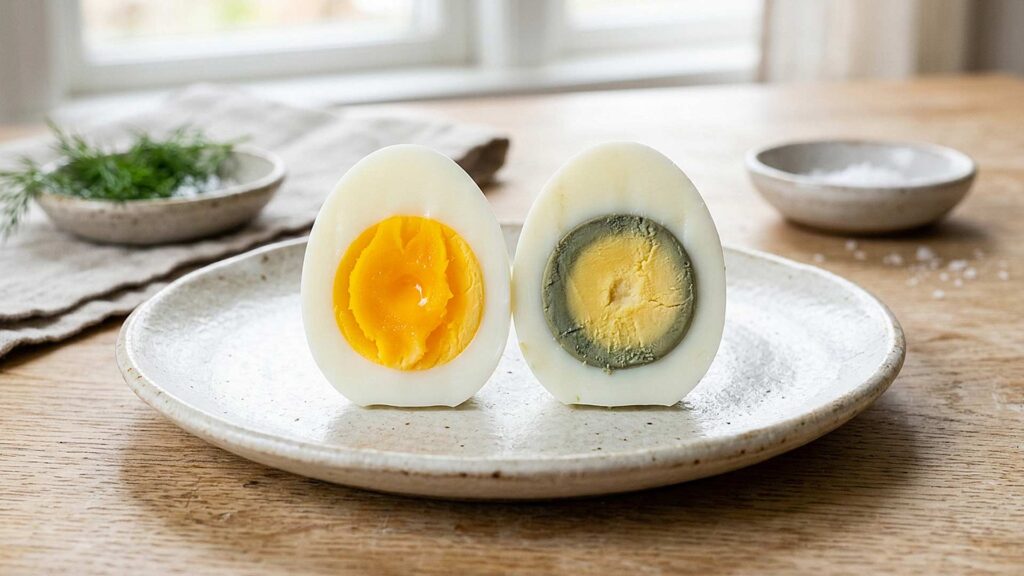
That grey-green ring around the yolk happens when eggs are overcooked.
It’s caused by a reaction between sulfur and iron—but it’s harmless.
How to Avoid It:
- Don’t overboil
- Stick to 10–11 minutes max
- Always use an ice bath
How Long Do Boiled Eggs Last?
Proper storage keeps your eggs fresh and safe.
- Unpeeled boiled eggs: Up to 7 days in the refrigerator
- Peeled eggs: Best within 3–5 days
Storage Tips:
- Store in an airtight container
- Keep in the fridge (not at room temperature)
- Avoid strong-smelling foods nearby (eggs absorb odors)
Are Hard-Boiled Eggs Healthy?
Absolutely. Hard-boiled eggs are:
- High in protein
- Rich in vitamins (B12, D, A)
- Good source of healthy fats
- Low in calories (~70–80 per egg)
They’re ideal for weight loss, muscle building, and healthy snacking.
Common Mistakes to Avoid
Avoid these if you want perfect eggs:
- ❌ Boiling too long
- ❌ Skipping the ice bath
- ❌ Using very fresh eggs for peeling
- ❌ Overcrowding the pan
- ❌ Peeling while still hot
Easy Ways to Use Hard-Boiled Eggs
Once ready, here are some simple ideas:
- Egg salad for sandwiches
- Deviled eggs for snacks
- Add to salads or rice bowls
- Eat with salt, pepper, or chaat masala
Quick Method (For Busy Days)
Short on time? Try this:
- Boil water first
- Add eggs gently
- Boil for 10 minutes
- Ice bath immediately
Final Thoughts
The secret to perfect hard-boiled eggs isn’t complicated—it’s just about getting the timing right and cooling them properly.
Once you master this method, you’ll get:
- Perfect texture
- Easy-to-peel shells
- Delicious results every time
Frequently Asked Questions (FAQ)
How long to hard boil a egg? For a standard large egg, you should boil it for 10 to 12 minutes in simmering water for a fully set, hard yolk.
Can I boil and egg in the microwave? It is highly recommended not to boil eggs in their shells in the microwave. The pressure builds up rapidly inside the shell, and the egg can explode dangerously either inside the microwave or as soon as you bite into it.
How do I store boiled eggs? Unpeeled hard-boiled eggs can be stored in an airtight container in the refrigerator for up to one week. If you have already peeled them, keep them submerged in a bowl of cold water in the fridge and change the water daily, consuming them within 2 to 3 days.
Why do my eggs crack when boiling? Eggs usually crack if they are dropped too roughly into the pot or if the water is at a violent, rolling boil that knocks them into each other. Lower them gently and keep the water at a gentle simmer.